
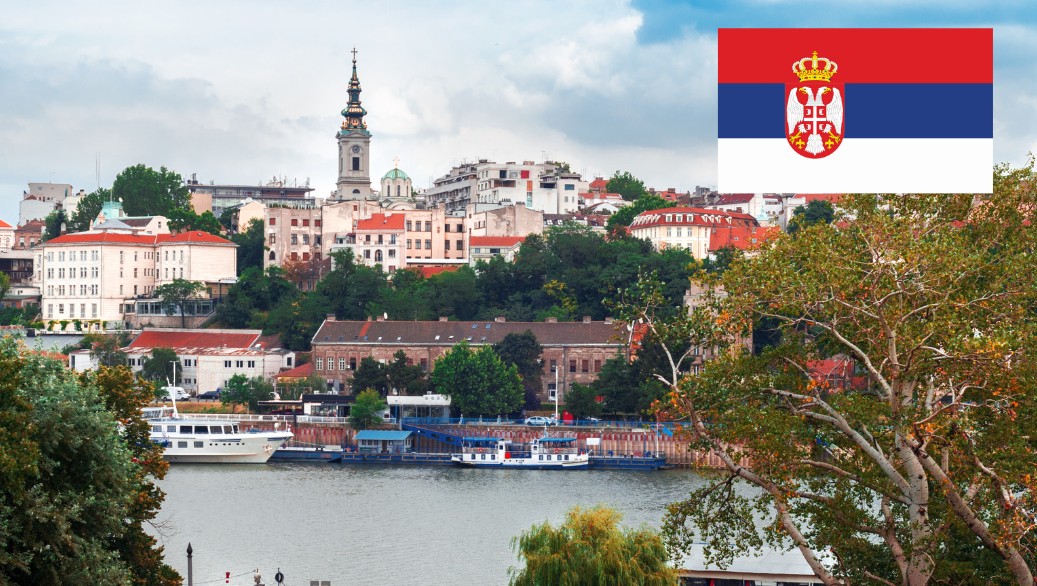

How to Open a Company in Serbia: A Guide for Foreign Investors
Thinking about doing business in Serbia? Serbia allows foreign individuals and foreign companies to establish businesses, and the process of incorporating a Serbian company is relatively straightforward.
For many foreign investors, the most common choice is a limited liability company (d.o.o.). However, incorporation is only the first step. Foreign founders also need to consider documentation, electronic registration, beneficial ownership, tax obligations, banking, accounting and, depending on the business, employment and sector-specific requirements.
This guide explains the main steps involved in opening a company in Serbia and highlights some of the issues foreign investors should consider before entering the Serbian market.
Important: This article provides general information based on Serbian regulations applicable at the time of publication. It is not legal, tax or accounting advice. Specific requirements may depend on the investor, business activity and ownership structure.
Can a foreigner open a company in Serbia?
Yes.
A foreign individual can establish a Serbian company, and a foreign legal entity can also participate as a founder.
For a foreign individual establishing a Serbian limited liability company, the registration documentation generally includes proof of identity, such as a passport. If the founder is a foreign company, documentation from the relevant foreign business register is required.
This means that you do not necessarily have to be a Serbian citizen to establish a Serbian company.
However, there is an important distinction between owning a Serbian company and living or working in Serbia. Company ownership does not automatically give a foreign founder the right to reside or work in Serbia. Immigration and work-permit requirements are separate matters and should be assessed independently.
1. Choose the appropriate legal form
Foreign investors can choose among several forms of business organisation in Serbia, including:
- Limited liability company (d.o.o.)
- Joint-stock company (a.d.)
- General partnership
- Limited partnership
For many small and medium-sized foreign investors, a d.o.o. (društvo sa ograničenom odgovornošću) is the most practical structure.
A Serbian d.o.o. can have one or more founders, and the founder can be a foreign individual or a foreign company.
The minimum registered share capital is currently only RSD 100, unless another law requires a higher amount for a particular activity.
An important practical point is that the capital does not necessarily have to be paid in before incorporation. It can be registered as a contribution to be paid later, with the deadline specified in the founding document. The statutory maximum period for payment is five years.
This means that the nominal minimum capital requirement is very low compared with the amount of capital that an investor may actually need to operate the business.
2. Choose the company name and registered address
Before submitting the incorporation application, the founders need to determine the company’s registered business name and registered address in Serbia.
The address is important because it becomes the company’s official registered seat.
Foreign investors should therefore consider their practical needs, including:
- whether the company needs physical office space;
- whether employees will work at the registered address;
- whether the premises are suitable for the intended business activity;
- whether the address can receive official correspondence; and
- whether any sector-specific requirements apply.
The registered address is not necessarily the same thing as the company’s operational premises, so the appropriate arrangement depends on the nature of the business.
3. Prepare the founding documents
For a d.o.o., the basic founding document is:
- a founding decision for a single-member company; or
- a founding agreement for a company with several members.
The documentation also needs to identify the company’s founders, share capital, ownership structure and other information required by Serbian company law.
The company must also have a representative. Depending on the structure, the founder can be appointed as the representative, or another person can be appointed.
What if the founder is a foreign company?
This is where the process becomes more complicated.
If a foreign legal entity is part of the ownership structure, documentation proving the foreign company’s registration and legal status will generally be required.
Serbian APR also notes that where a foreign company appears in the registration structure, incorporation through the electronic system involves the participation of a Serbian public notary or lawyer, because the foreign company’s register extract has to be digitised in accordance with Serbian electronic-document rules.
This is one of the areas where professional assistance can save considerable time.
4. Check whether foreign documents need Apostille or legalisation
Foreign investors should not assume that a document issued abroad can simply be submitted to a Serbian authority.
Depending on the country where the document was issued, foreign public documents may need:
- an Apostille;
- full legalisation; or
- no legalisation at all where Serbia has a relevant bilateral agreement with the country concerned.
The exact requirement therefore depends on the country of origin and the type of document.
This should be checked before obtaining the documents, because the authentication procedure can take additional time.
5. Translate foreign-language documents into Serbian
This is particularly important for foreign investors.
Documents issued in a foreign language may need to be submitted together with a certified translation into Serbian by a court/sworn translator, depending on the specific registration or administrative procedure.
Documents that may require translation can include corporate registration documents, powers of attorney, certificates and other official documentation.
For a foreign company entering Serbia, translation is therefore not simply a matter of making the company’s website bilingual. Official documents may need to be legally usable in Serbian.
CAT Translation Language Studio provides certified/sworn translation services for corporate and official documentation, including Serbian-English and Serbian-Italian language combinations.
6. Register the company with the Serbian Business Registers Agency (APR)
Company incorporation is handled by the Serbian Business Registers Agency (APR).
Since 17 May 2023, incorporation of companies such as d.o.o., a.d., k.d. and o.d. has been carried out electronically.
The electronic registration system is part of Serbia’s one-stop registration process.
Depending on the circumstances, the registration process can simultaneously involve obtaining:
- the company’s registration/master number;
- its Serbian Tax Identification Number (PIB);
- VAT registration, where applicable; and
- registration for mandatory social insurance in the relevant circumstances.
APR’s statutory deadline for deciding on a registration application is five working days from receipt of the application.
The actual preparation of the application can, of course, take longer if documents need to be obtained, authenticated, translated or corrected.
7. Register the company’s beneficial owner
This is an area foreign investors should pay particular attention to in 2026.
Serbia has introduced a strengthened system for recording beneficial owners (ultimate beneficial owners).
In general, a beneficial owner is a natural person who directly or indirectly owns 25% or more of the shares, voting rights or capital, or who otherwise exercises decisive influence over the company. The legislation also provides additional criteria for determining the beneficial owner in more complex structures.
For newly established companies, the beneficial-owner information must be recorded within the statutory deadline, and supporting documentation must be uploaded.
The current system also provides for annual verification of beneficial-owner information.
This is particularly relevant for foreign-owned Serbian companies because the ownership chain may involve several companies in different jurisdictions.
A foreign investor should therefore establish the ownership structure and supporting documents before incorporation rather than treating beneficial-owner registration as an afterthought.
8. Open a Serbian business bank account
After incorporation, the company will normally need a business bank account in Serbia.
The bank may require documentation concerning:
- the Serbian company;
- its founders and beneficial owners;
- the representative;
- the source and purpose of funds; and
- the foreign parent company, where applicable.
Bank onboarding is separate from APR registration, and banks may apply their own compliance procedures.
Foreign investors should therefore allow additional time for the bank-account process, particularly where the ownership structure is international.
9. Understand your tax obligations
Incorporation does not mean that a company can simply begin operating without considering its tax obligations.
Depending on the business, the company may have obligations relating to:
- corporate income tax;
- VAT;
- payroll taxes and social-security contributions;
- withholding tax;
- accounting and financial reporting; and
- other sector-specific taxes or duties.
What about VAT?
VAT treatment depends on the company’s activities and turnover.
Serbian VAT legislation uses a turnover threshold for the small-taxpayer regime, and businesses can also enter the VAT system voluntarily in certain circumstances.
The rules are important to check carefully because the VAT legislation has been amended in 2026, with some changes applying from 1 January 2027.
For this reason, foreign investors should obtain current tax advice rather than relying on an older online guide when deciding whether and when to register for VAT.
10. Arrange accounting from the beginning
A Serbian company needs to comply with Serbian accounting and tax-reporting requirements.
For a foreign investor, hiring an accountant familiar with companies with foreign ownership can be particularly useful.
The accountant may assist with:
- bookkeeping;
- tax returns;
- payroll;
- VAT;
- financial statements;
- communication with the Serbian Tax Administration; and
- other recurring reporting obligations.
It is generally much easier to establish the correct accounting structure before the first invoice or employee salary, rather than trying to reconstruct everything later.
11. Check whether your business activity requires additional licences
Not every business can simply be started after incorporation.
Certain industries and activities are subject to additional conditions, licences, permits or approvals.
This can apply, for example, to regulated financial activities, healthcare, transport, energy, telecommunications, food production and other regulated sectors.
Therefore, registering a company with APR does not automatically mean that every activity is authorised.
A foreign investor should check the regulatory requirements for the specific business activity before beginning operations.
12. Consider Serbia’s free zones and investment incentives
Foreign companies considering Serbia should also examine the country’s free zones and investment incentives.
Serbia has a network of free zones where qualifying businesses can benefit from certain customs and tax-related advantages, subject to the applicable rules.
The Serbian Development Agency also provides information about investment incentives available for qualifying projects.
However, these benefits are not automatic simply because a company is foreign-owned or newly established.
Eligibility depends on the project, investment, location, employment and other applicable criteria.
For companies planning manufacturing, logistics or larger-scale investment, this can be an important part of the initial market-entry analysis.
What documents should a foreign investor prepare?
The exact list depends on the ownership structure and business activity, but a foreign investor may need documents such as:
- passport or other proof of identity;
- extract from the foreign company’s business register;
- founding documents;
- powers of attorney;
- documents concerning the beneficial owner;
- proof concerning the company’s registered address;
- documents relating to capital contributions; and
- licences or approvals required for regulated activities.
Foreign public documents may also require Apostille or legalisation, while documents in foreign languages may require certified Serbian translations.
Planning this documentation in advance can significantly reduce delays.
How long does it take to open a company in Serbia?
APR’s statutory decision period is up to five working days once a properly prepared registration application has been submitted.
However, this should not be interpreted as meaning that a foreign investor can always go from “I want to open a company” to “fully operational company” in five days.
Before submission, you may need to:
- decide on the legal structure;
- prepare the founding documents;
- obtain foreign corporate documents;
- arrange Apostille/legalisation where necessary;
- translate documents into Serbian;
- arrange electronic signing and submission;
- complete beneficial-owner requirements;
- open a bank account;
- arrange accounting and tax compliance; and
- obtain any sector-specific licences.
For a straightforward structure, the process can be relatively quick. More complex international ownership structures naturally require more preparation.
Common mistakes foreign investors should avoid
1. Treating company registration as the entire process
APR registration is the beginning of the company’s legal existence, not the end of the market-entry process.
2. Obtaining foreign documents without checking authentication requirements
An incorrectly authenticated document can create unnecessary delays.
3. Leaving translation until the last minute
If official documents need certified translation into Serbian, translation should be planned alongside the incorporation process.
4. Ignoring beneficial-owner compliance
Foreign ownership structures can make beneficial-owner identification more complicated. The relevant supporting documents should be prepared carefully.
5. Assuming the minimum capital is the actual investment required
A d.o.o. can have registered capital of only RSD 100, but that obviously does not mean that RSD 100 is enough to operate a real business.
6. Assuming that company ownership gives the founder residence or work rights
Corporate registration, residence and employment status are separate legal matters.
7. Using outdated information about Serbian tax rules
Tax legislation changes. Foreign investors should verify the rules applicable to their specific business and the date on which the relevant rules take effect.
Why Serbia can be attractive to foreign investors
Serbia offers foreign investors access to a relatively large regional market, a strategic location in Southeast Europe, a comparatively straightforward company-registration system and various investment-support mechanisms.
For companies from Italy, Germany, Austria, the United States and other markets, Serbia can also be an attractive location for manufacturing, services, technology, logistics and regional operations.
But entering a new market involves more than establishing a legal entity.
It also involves language, documentation and communication.
Corporate documents need to be understood correctly. Contracts need to be translated accurately. Meetings with Serbian partners, authorities and institutions may require professional interpreting. And when official documents are involved, terminology and certification requirements matter.
Need translation or interpreting support for entering the Serbian market?
At CAT Translation Language Studio, we support international companies working with Serbia through professional translation and interpreting services.
Our services include:
- certified/sworn translation of official and corporate documents;
- Serbian-English translation;
- Serbian-Italian translation;
- business and legal translation;
- conference and consecutive interpreting; and
- interpreting for meetings, negotiations and business events.
If you are considering establishing a company or expanding your business into Serbia, we can help you communicate accurately with Serbian institutions, business partners and professional advisers.
Your Serbian market entry should not get lost in translation.
Contact CAT Translation Language Studio to discuss your translation or interpreting requirements.
Frequently Asked Questions
Can a foreigner open a company in Serbia?
Yes. Foreign individuals and foreign legal entities can establish or participate in Serbian companies, subject to the applicable registration requirements.
What is the minimum capital for a Serbian d.o.o.?
The minimum registered share capital is currently RSD 100, unless a higher amount is required by a special law.
Does the founder have to live in Serbia?
Company ownership and Serbian residence are separate issues. A foreign founder should check the applicable immigration and work rules separately.
How long does company registration take?
APR has a statutory decision period of up to five working days from receipt of the registration application, assuming the legal requirements are met.
Do foreign documents need to be translated into Serbian?
Foreign-language documents submitted to Serbian authorities may require certified translation by a court/sworn translator. Authentication requirements also depend on the country where the document was issued.
Does every Serbian company have to register for VAT?
Not necessarily. VAT obligations depend on the company’s circumstances, turnover and activities. The current Serbian VAT rules should be checked before registration.
What is a beneficial owner?
Generally, this is the natural person who ultimately owns or controls the company, including a person who directly or indirectly holds 25% or more of the relevant ownership or voting rights, subject to the statutory criteria.
Can a Serbian company be owned by a foreign company?
Yes. A foreign legal entity can be a founder/member of a Serbian company, although additional documentation and procedures apply.